



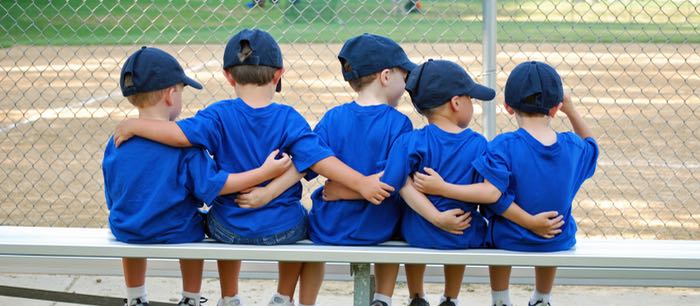
In school, students learn more than reading and math. Every day, they learn how to manage emotions, resolve conflicts, work with others, and make decisions.
In This Lesson
What is social-emotional learning?
How does SEL connect with mental health?
What skills does SEL teach?
What is grit?
What are soft skills?
Should social-emotional skills be measured?
How does social media affect social-emotional development?
▶ Watch the video summary
★ Discussion Guide
Growing up is complicated. Students are constantly reaching conclusions about who they are, how they should treat others, and what they want from life. School generates teachable moments every day. Teachers, principals, counselors, and other school staff help students learn from them.
This lesson explains what social-emotional learning (SEL) is, why schools teach it, and what we know about whether it works. It also explores how SEL overlaps with mental health, soft skills, grit, and the challenges of growing up in a digital world.
What is Social-Emotional Learning (SEL)?
Schools are designed to deliver academic learning. Reading. Math. Homework. Tests. Grades. But school is also the backdrop for growing up, a complex process fraught with feelings and relationships. Students must cope somehow, whether schools teach them intentionally or not. The question is whether schools should help students develop skills intentionally, or simply leave them to chance. Educators often use the term “social-emotional learning” to refer to the intentional development of life skills such as self-awareness, self-management, and healthy relationships.
Academic success has a lot to do with mental health
Mental health and learning are closely connected. Students who feel safe, supported, and emotionally healthy are generally better able to learn. Social-emotional learning (SEL, pronounced ess-ee-ell) is one way schools help students build everyday skills such as self-awareness, self-management, communication, and responsible decision-making.
There is no single universally accepted definition of social-emotional learning (SEL), but most descriptions are remarkably similar. CASEL, the nation's leading organization devoted to SEL, defines it as the process through which young people develop the knowledge, skills, and attitudes needed to build healthy identities, manage emotions, establish supportive relationships, and make responsible decisions. Rather than focusing on formal language, CASEL invites us to think about a young person we care about and ask a simple question: What knowledge, skills, and attitudes will they need to achieve their hopes and dreams? The Committee for Children illustrates these ideas in this short video:
Growing acceptance of SEL concepts
The ideas behind social-emotional learning are broadly accepted, even though the term itself has become politically charged. In a large, nationally-representative survey of parents, the center-right Thomas B. Fordham Institute found strong support for schools helping students develop skills such as self-control, empathy, perseverance, and responsible decision-making. Opinions were more divided when parents were asked about social-emotional learning by name or when SEL was presented as competing with academic instruction. Views also differed by political affiliation.
Some critics worry that SEL programs can take time away from academics, introduce values that conflict with those taught at home, or ask teachers to take on responsibilities better handled by families or mental-health professionals. Supporters generally describe SEL more narrowly: helping students manage emotions, work with others, resolve conflicts, and make responsible decisions. As with any educational approach, the details of implementation matter.
Implemented well, SEL is not merely a stand-alone classroom program. It can also shape how adults and students communicate, respond to conflict, establish expectations, and build the culture of a school.
What skills does SEL teach?
Most descriptions of SEL include five interrelated sets of competencies:
- Self-awareness. The ability to accurately recognize one’s emotions and thoughts and their influence on behavior.
- Self-management. The ability to regulate one’s emotions, thoughts, and behaviors effectively in different situations, and to set and work toward personal and academic goals.
- Social awareness. The ability to take the perspective of and empathize with others from diverse backgrounds and cultures and to recognize family, school, and community resources and supports.
- Relationship skills. The ability to establish and maintain healthy and rewarding relationships with diverse individuals and groups, including the skills to communicate clearly, listen well, cooperate, negotiate conflict constructively, and seek and offer help when needed.
- Responsible decision-making. The ability to make constructive and respectful choices about personal behavior and social interactions based on consideration of ethical standards, safety concerns, social norms, the realistic evaluation of consequences of various actions, and the well-being of self and others.
These competencies are worth teaching. Together, they help students succeed not only academically but also in friendships, family life, civic participation, and future careers.
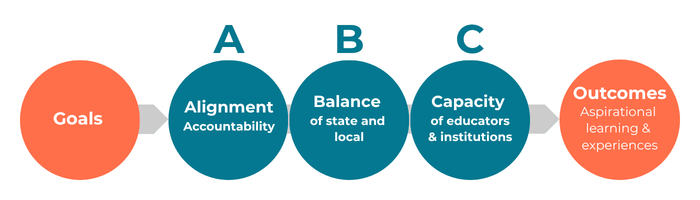
Adolescence is an especially important time for both learning and social-emotional development. A 2026 report associated with Getting Down to Facts III concludes that strong relationships and meaningful opportunities to think deeply, reflect, and contribute support adolescent learning, resilience, and well-being.
What are soft skills?
Employers have long valued qualities such as communication, teamwork, problem-solving, adaptability, and self-management. These abilities have often been called soft skills, though many organizations now prefer terms such as durable skills, essential skills, or professional skills.
Social-emotional learning helps students understand and manage emotions, build healthy relationships, and make responsible decisions. These competencies also support many of the communication and collaboration skills that students will need in college, careers, and civic life.
Whether we call them soft skills or something else, the central idea is that these skills can be learned. They are not fixed personality traits. Like academic skills or athletic skills, they can be strengthened through practice with feedback and experience. Effort is involved.
What is grit?
Psychologist Angela Duckworth popularized the idea of grit—the combination of passion and perseverance that helps people pursue long-term goals despite setbacks. Her work sparked widespread interest in the role of persistence and resilience in school success.
How is grit different from agency?
Buzzword alert: agency
Duckworth's work prompted an important discussion. Some educators worried that an emphasis on individual perseverance could unintentionally suggest that students simply need to "try harder," even when they face significant barriers outside their control.
Education scholar Pedro Noguera argues that schools should also cultivate agency—students' belief that they can make choices, solve problems, and influence the course of their own lives. Developing agency means helping students see themselves not just as persistent learners, but as capable decision-makers who can work with others to overcome challenges.
Can SEL skills be measured?
Reading and math are tested because they are considered important. If communication, self-management, and responsible decision-making also matter, should schools try to measure those skills, too?
Duckworth and many other researchers have urged caution about using SEL measures for high-stakes accountability. Assessing social-emotional learning is much harder than giving a math test. For example, self-reported surveys can be influenced by how students interpret questions or by how they think they are expected to respond.
Social media and social-emotional skills
Many educators and parents worry about how social media is changing the ways young people communicate, pay attention, and think about themselves. Research has consistently found that heavy use of social media is associated with poorer mental health and well-being among adolescents.
Learning to use technology wisely has become part of growing up.
Schools cannot solve these challenges alone, but they can help students build healthy relationships, communicate respectfully, resolve conflicts, recognize misinformation, and develop habits that support attention and learning both online and offline.
California has taken policy steps to reduce digital distractions that interfere with social learning. State law restricts certain addictive social media features for minors, and school districts are now required to have policies that limit or ban student use of smartphones during the school day.
From skills to habits and character
Social-emotional learning focuses primarily on developing skills that students can practice and strengthen over time. A closely related idea, character education, asks a somewhat different question: Should schools also seek to cultivate enduring virtues such as honesty, courage, fairness, and responsibility?
Reasonable people disagree about where schools should draw that line. The next lesson explores those questions and examines the role of character education in public schools.
Updated August 2026
Quiz×
CHAPTER 6:
The Right Stuff
-
The Right Stuff
Overview of Chapter 6 -
Grade-Level Standards
What is the Common Core? -
Is School Challenging Enough?
Academic Rigor -
Literacy in California
Ensuring All Kids Can Read, Write and Speak English -
STEM Education in California
Science, Technology, Engineering and Math -
Why Are Tests Important?
Why Tests Matter and How They Work -
Technology in Education
Tools for Teaching and Learning -
Student Engagement
How to Make School Interesting -
Arts Education
Creativity in California Schools -
P.E. and School Sports
How Does Sweat and Movement Help Learning? -
Field Trips
Beyond the Classroom -
Career Technical Education
Vocational Learning, Dual-Enrollment, and Internships -
Service Learning
Civic Engagement and Helping Others -
What Is Social-Emotional Learning (SEL)?
Should Schools Teach Life Skills? -
Can Values and Habits be Taught?
Character Education -
Civics, History and Geography
How Do Kids Learn About Their Country and the World? -
How do Kids Become Bilingual?
World Language Learning in California Schools -
Financial Literacy in California
Learning to Earn
Related
Sharing is caring!
Password Reset
Search all lesson and blog content here.
Login with Email
We will send your Login Link to your email
address. Click on the link and you will be
logged into Ed100. No more passwords to
remember!









Questions & Comments
To comment or reply, please sign in .
Carol Kocivar November 4, 2025 at 3:56 pm
Carol Kocivar June 14, 2022 at 3:54 pm
The American Academy of Pediatrics, American Academy of Child and Adolescent Psychiatry, and Children‘s Hospital Association declared a state of emergency in national child and adolescent mental health.
Between March 2020 and October 2020, mental health related emergency room visits spiked 24 percent for children ages 5 to 11 and 31 percent for children ages 12 to 17.
Healthline explains: https://www.healthline.com/health/mental-health/social-emotional-learning-important
Carol Kocivar June 14, 2022 at 3:54 pm
The American Academy of Pediatrics, American Academy of Child and Adolescent Psychiatry, and Children‘s Hospital Association declared a state of emergency in national child and adolescent mental health.
Between March 2020 and October 2020, mental health related emergency room visits spiked 24 percent for children ages 5 to 11 and 31 percent for children ages 12 to 17.
Healthline explains: https://www.healthline.com/health/mental-health/social-emotional-learning-important
Alisa Sabshin-Blek August 24, 2020 at 12:22 pm
Susannah Baxendale February 2, 2019 at 1:21 pm
In the old days, teachers provided written comments ("plays well with others"), which was definitely subjective but could be helpful. If year after year teachers were describing a child the same way, the same issues could arise. This is not to say that social-emotional skills and strategies should be ignored, I'm just not clear on assessment of success.
Lm December 8, 2018 at 4:29 pm
Caryn December 10, 2018 at 8:57 am
Carol Kocivar March 3, 2018 at 5:21 pm
Social-Emotional Learning
Carol Kocivar July 19, 2017 at 3:12 pm
https://edsource.org/2017/social-and-emotional-learning-appears-to-provide-benefits-that-last
s.harder November 17, 2015 at 11:24 am