



New laws parents and teachers should know about: 2026
Our wrap-up of the year’s new laws
California’s 2026 legislative session has concluded. Here are the new laws that matter for schools, students, and families.
In This Post
Education and Instruction
Elections and Democracy
Climate
Protecting Civil Rights
Keep kids safe online
Gun Safety
Health and Pupil Safety
Equity/Discrimination
School Meals
English Learners
Dependent and Foster Youth
Taxes
Online safety, protecting democracy, and protecting immigrant families all topped California’s legislative agenda, along with a major change in statewide education governance.
1 Protecting Democracy
The Right to Vote. Public education prepares students for citizenship, and voting is at the heart of democracy.
California adopted a series of laws to protect voting, including measures addressing voter suppression (SB 1164), interference with elections (SB 73), and interference with mail-in ballots (SB 259). More protections are included in our full compilation below.
2 Kids’ Online security
AI and online platforms increasingly affect children at home and school. New laws aim to curb harmful practices and protect children online. Highlights include:
SB 1128 (Stern) generally prohibits schools from requiring kindergarten students to take school-issued electronic devices home and directs CDE to provide guidance on screen time and device use.
School districts are asked to review and update their policies related to pupils’ screentime, including in the classroom and when completing homework, as well as providing pupils with school-issued devices.
New laws prohibit platforms from providing addictive features to users under age 16 (AB 1709) and establish child privacy and design requirements for businesses providing online services, products, or features likely to be accessed by children (AB 2246).
3 Protecting immigrant students and families
There are now more protections for people caught in ICE raids and other actions that interfere with constitutional rights. When parents’ rights are violated, the resulting trauma can make children less likely to attend school and learn.
Courthouse arrests: People going to or from the courthouse are now protected from civil arrest (SB 873).
Civil rights: There is now a cause of action for the violation of a person’s constitutional rights government officials including ICE (SB 747). Under this act, which was co-sponsored by the California State PTA, individuals can seek remedies.
| First Amendment | Retaliating against a person for their protected speech, interfering with the free exercise of religion or the freedom of the press, or using excessive force to break up a peaceful protest. |
| Fourth Amendment | Conducting an unlawful search of a person’s home or an unreasonable seizure at a checkpoint without a warrant or probable cause, or using excessive force during arrest. |
| Fifth Amendment / Equal Protection | Unlawfully targeting individuals for enforcement actions or tax audits on the basis of race, national origin, or political identity. |
4 Education
Leadership: California has long divided education leadership between state policymakers and the independently elected Superintendent of Public Instruction (SPI), who leads the Department of Education.
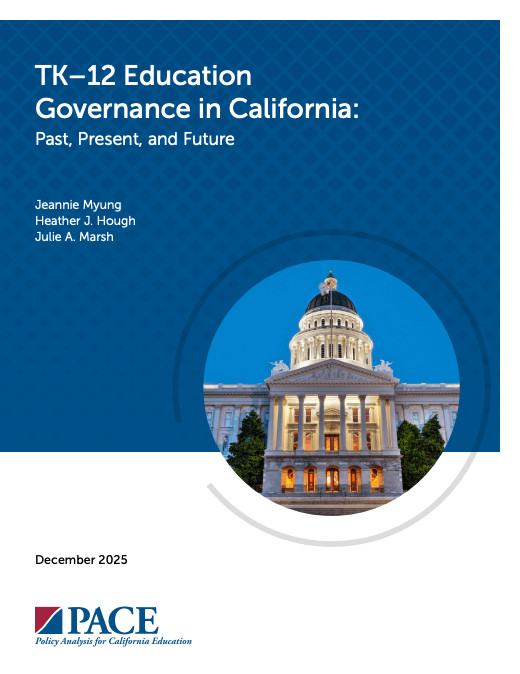
Critics have long argued that this divided authority creates confusion and weakens accountability, most recently the Legislative Analyst and PACE.
Beginning in 2027, AB 181 reorganizes CDE under a governor-appointed Education Commissioner. The SPI becomes an independent statewide voice and watchdog.
Math instruction: Following the lead of required diagnostic assessments for English language skills, a new law requires the State Board of Education to approve criteria and guidance for diagnostic assessments in kindergarten, 1st, and 2nd grades for math knowledge. (SB 1067)
Special education: An additional $2.4 billion will be directed to special education as a result of passage of AB 126, a trailer bill associated with the state budget. This still leaves school districts without a long-term solution to the rising costs of special education.
Arts education: A new law, AB 2440, fixes some of the implementation glitches of the Proposition 28 Arts and Music in Schools Act, which funds arts education. For school districts with an enrollment of 500 or more, at least 80 percent of funds must be used to employ certificated or classified employees to provide arts education program instruction. The remaining funds may be used for training, supplies, and arts educational partnership programs. Funding may be pooled — for example, an educator may teach visual arts on Mondays, Wednesdays, and Fridays at one school site that pays three-fifths of their salary, and on Tuesdays and Thursdays at another site that pays the remaining two-fifths.
Ed100 primer on legislative process
Each year, after the legislative dust settles, Ed100 summarizes bills that relate to schools and children, with tons of links. Here are our posts from past years:
2025
2024
2023
2022
2021
2020
2019
2018
In California, ideas can become laws in two ways. One way is through the state budget process, as we explain in this post: What happened to the education budget?
The other way is through policy legislation.
Legislative sessions are grouped into two-year intervals, matching the election cycle.
| 2026 California legislation by the numbers | |
|---|---|
| Bills introduced | 2,523 |
| Bills that reached the Governor's desk | You can find a list here. |
| Bills vetoed | You can find a list here. |
Many bills don’t become law, even with strong advocacy and legislative agreement. It’s common for complex bills to require several tries over multiple years. Committees play a powerful role in the legislative process, including the power to kill a bill, with or without an explanation.
Bills can die at the Governor’s desk, too. When the Governor exercises the constitutional authority to veto a bill, it is customary to explain the reason in the form of a veto message.
Here’s an Ed100 list of new laws in 2026 that affect our schools, our children, and the democracy they will grow up in. Laws are written using precise terms that can make them hard to understand. We’ve done our best to summarize them plainly, in English and Spanish.
| Education and Instruction | |
|---|---|
| AB 181 (Alvarez) Education governance: Transfer of duties. | Establishes an appointed Education Commissioner under the State Board of Education to assume management of the Department of Education while further empowering the State Superintendent of Public Instruction to serve as an independent statewide voice for students, families, and educators from TK through higher education. |
| AB 2440 (Muratsuchi) Arts and Music in Schools—Funding Guarantee and Accountability Act: allowable uses: pooled funding: certifications. | Clarifies provisions of the Proposition 28 Arts and Music in Schools Act, including requirements school districts must meet in order to pool funds, the definitions of allowable costs under the supplement not supplant requirements, and the definition of arts education programming. See Background from Edsource. |
| SB 965 (Blakespear) Public libraries: library cards. | Now 16- and 17-year-olds don’t need to bring a parent with them to get a public library card. |
| AB 1871 (Fong) Pupil instruction: dual enrollment: College and Career Access Pathways partnerships. | This bill changes the College and Career Access Pathways (CCAP) dual enrollment program by:
|
| AB 2332 (González) Dual language immersion: Dual Language Immersion Coordinator. | Requires the CDE to establish a Dual Language Immersion Coordinator to provide coordination between local educational agencies to share resources and knowledge about dual language immersion programs. |
| AB 2468 (Patel) School accountability: pupils with disabilities: inclusion. | Establishes the Supporting Inclusive Practices (SIP) Project in statute and assigns responsibility for statewide universal technical assistance to the California Collaborative for Educational Excellence (CCEE) The project aims to help strengthen inclusive practices through tiered technical assistance and support. It has been operating for ten years. |
| SB 845 (Pérez) Pupil instruction: career technical education, career education, work-based learning, work experience education, and apprenticeships. | Makes various changes to the state’s framework for career technical education work-based learning, and youth apprenticeships. |
| SB 1067 (Weber Pierson) Pupil instruction: math assessments. | Requires the State Board of Education to approve criteria and guidance for diagnostic assessments that districts can use to assess students in kindergarten, 1st, and 2nd grades for math knowledge. |
| SB 1412 (Rubio) Parental communication: teacher meetings | Gives parents the ability to request a parent-teacher conference online or over the phone if they are unable to attend in person. |
| AB 126 (education trailer bill for the California state budget) Special Education Funding | Allocated an additional $2.4 billion for special education funding. |
| AB 1590 (Ransom) California Career Technical Education Incentive Grant Program: revised allocation formula. | Requires the CDE to determine a revised allocation formula for the Career Technical Education Incentive Grant Program that ensures that all funds appropriated for the program in any given fiscal year are fully allocated to program applicants in that year to the maximum extent practicable. |
| AB 2071 (Hoover) Pupil instruction: digital wellness. | Requires the CDE to develop a plan to expand digital wellness instruction in California public schools on or before January 1, 2028. |
| AB 2107 (Pellerin) Expanded Learning Opportunities Program: offering access: unduplicated pupils | Requires local educational agencies to prioritize offering access to the Expanded Learning Opportunities Program to students who are low income, English learners, or in foster care, and authorizes specialized outreach to parents and guardians to provide assistance with the enrollment. |
| AB 2298 (Irwin) Pupil instruction: computer science: content standards. | Requires the Instructional Quality Commission to consider incorporating cybersecurity skills the next time it revises the content standards in computer science. |
| AB 2490 (Valencia) Teacher credentialing: emergency career substitute teaching permit: alternative qualifications. | Expands eligibility for the Emergency Career Substitute Teaching Permit by establishing an alternative pathway and authorizes permit holders who qualify through that pathway to serve up to 70 cumulative days in a single classroom assignment, including special education classrooms. |
| AB 2496 (Solache) Local educational agencies: reports: school accountability report card: California School Dashboard: local control accountability plan: local control funding formula budget overview. | Requires the CDE to report to the Legislature duplications between the data contained in the school accountability report card (SARC) and other publicly available data sources. |
| AB 1713 (Ransom) Public postsecondary education: students with disabilities: verification: academic accommodations. | Requires the California Community Colleges and the California State University, and requests the University of California, to accept a student’s individualized education program (IEP), Individual Program Plan (IPP), or Section 504 plan as verification of disability for purposes of requesting academic accommodations. |
| AB 1766 (Krell) Health curriculum framework: human trafficking and online safety. | Requires the Instructional Quality Commission to consider including content related to human trafficking and online safety. |
| AB 1904 (Gipson) Teachers: credentialed educator apprenticeship programs. | Establishes the Credentialed Educator Apprenticeships Act and creates a framework for the approval, oversight, and operation of credentialed educator apprenticeship programs in California. |
| AB 1969 (Bonta) California Community Schools Partnership Program: Promise Neighborhoods. | Authorizes up to 10% of the funds provided to local educational agencies to implement new and provide ongoing support for existing community schools to be used to serve as a network lead for multiple eligible community school sites located in a Promise Neighborhood in support of the California Community Schools Partnership Program. |
| SB 685 (Cortese) Special education: nonpublic schools and agencies. | In response to a federal ruling in Loffman v. California Department of Education, this law specifies conditions under which public schools may contract with sectarian nonpublic schools that provide intensive special education services. |
| Elections and Democracy | |
|---|---|
| SB 73 (Cervantes and Umberg) Elections | Bars law enforcement — including federal agents — from interfering with the administration of an election. The law also criminalizes knowingly seizing ballots from election officials’ custody, punishable by up to a $1,000 fine, three years imprisonment, or both. |
| AB 282 (Pellerin) Elections: seizure of election materials | Makes it a felony: 1) to seize or cause or assist in the seizure of ballots, election records, or certified voting technology before election results are certified by the elections official and 2) for any person with authority to direct another person subject to their supervision or authority to seize ballots, election records, or certified voting technology before election results are certified. |
| SB 259 (Wahab) Elections: vote-by-mail ballots | Makes it a felony for a person with authority to direct a person subject to their supervision or authority to interfere with the delivery or return of a vote-by-mail (VBM) ballot. This bill also makes it a misdemeanor for a person who has charge of a VBM ballot to interfere with its delivery to a voter. |
| AB 2103 (Irwin) Office of Data and Innovation: Engaged California Program. | Establishes the Engaged California program within the Office of Data and Innovation. It will function as a modern digital forum that allows participants to opt in to the conversation at their convenience. |
| AB 502 (Pellerin) Elections: deceptive media in advertisements. | Prohibits the distribution of certain campaign advertisements and other election communications that contain media that has been digitally altered in a deceptive way. |
| AB 686 (Berman) Elections: deceptive audio or visual media | Extends existing state laws that prohibit distributing materially deceptive audio or visual media (i.e., “deepfakes”) with the intent to injure a candidate’s reputation. |
| AB 1130 (Berman) Political Reform Act of 1974: campaign disclosures. | Makes the person who posts and the campaign committee liable for penalties that result from not making required disclosures. |
| AB 1664 (Jackson) Elections: law enforcement investigations of election records or voting technology. | Requires notice to the Secretary of State and the California Attorney General immediately, but no later than one calendar day, after becoming aware of any warrant, subpoena, or active law enforcement investigation pertaining to the search, seizure, or retention of any election records or certified voting technology. |
| AB 2281 (Berman) Office of Elections Cybersecurity. | Requires the Secretary of State to assess whether additional state resources are needed to replace election cybersecurity resources previously provided by the federal government and permits the Office of Elections Cybersecurity to consult with academic researchers to develop best practices for protecting against threats. |
| SB 1164 (Cervantes) Elections. | Revises and expands the California Voting Rights Act of 2001 to further protect voters from voter suppression and vote dilution. |
| SB 1360 (Cervantes) Elections: translation of election materials. | Increases language access services and the types of translated election-related materials for voters. |
| SB 884 (Umberg) Elections in 2026 through 2029. | Extends the time vote-by-mail drop off locations are open and modifies the type and range of prohibited activities near a polling location for elections held or proclaimed in 2026-2029. |
| SB 1418 (Cervantes) Preservation of election materials. | Makes it a crime to take election materials or voting technology from the custody of election officials and expands the types of materials required for preservation if an election contest or criminal proceeding is ongoing. |
| SB 1420 (Richardson) Vote-by-mail ballots and early voting. | Requires the Secretary of State to (1) establish uniform procedures for election officials that allow a voter to vote their VBM ballot at a polling location without the VBM ballot’s identification envelope; and (2) requires information to be included in the state voter information guide about early in-person voting opportunities. |
| AB 1853 (Pellerin) Voter information guide: candidate statements. | Establishes uniform rules for what may be included in a candidate statement in a state or local voter information guide (VIG) and establishes how a noncompliant statement may be kept out of a VIG. Background: AB 1853 comes in response to a candidate statement that appeared in the June 2026 official state voter information guide that used the voter guide as a platform to share hateful and antisemitic rhetoric and links to external inappropriate content. |
| AB 2604 (Berman) Elections: ballot curing. | Requires the Secretary of State to implement and make available to county election officials a system that allows voters to access electronic signature curing to correct a missing or a non-matching signature. |
| Climate | |
|---|---|
| SB 1048 (Becker) California State Seal of Climate Literacy for high school students. Co-Sponsored by the California State PTA | The new diploma distinction will recognize students who demonstrate climate knowledge and the ability to apply what they learn through hands-on projects addressing real-world challenges. The Seal makes climate literacy a recognized achievement in California, alongside civic engagement and biliteracy. |
| AB 762 (Irwin) Disposable, battery-embedded vapor inhalation device: prohibition and penalties. | Bans disposable vape devices, which have proved to be a fire hazard and a source of toxic trash. |
| AB 1653 (Lackey) Pupil instruction: health framework: heat illness. | Requires the Instructional Quality Commission to consider including and recommending for adoption by the State Board of Education specific content related to the prevention of, identification of, and response to signs and symptoms of heat illness. |
| AB 2667 (Hadwick) Vape products: household hazardous waste: advertising. | Some vapes are disguised as everyday items, like school supplies or clothing. Some have features intentionally designed to increase dependency and addiction, like built-in video games. Schools are increasingly confiscating these vapes, yet they lack practical options to safely manage and dispose of them. Similarly, local household hazardous waste facilities receiving these vapes are unable to identify them and disassemble them, increasing costs and fire hazards. Assembly Bill 2667 bans disguised and interactive vapes. It also gives schools and local governments the tools to safely manage and dispose of vape waste. |
| Protecting civil rights | |
|---|---|
| SB 873 (Reyes and Umberg) Courthouses: privilege from civil arrest | Prohibits a person traveling to or from, or while present at, a courthouse for any lawful activity from being subject to civil arrest. |
| AB 2318 (Elhawary) Law enforcement: facilitating medical care. | Prohibits a law enforcement officer from denying or delaying access to medical care for an individual under law enforcement control and requires law enforcement officers to document when they do deny or delay access to medical care. |
| SB 747 (Wiener) Civil rights: deprivation of federal constitutional rights, privileges, and immunities. Co-Sponsored by the California State PTA | Establishes, on an urgency basis, a cause of action for the violation of a person’s constitutional rights by a government official. Background: Under federal law, a cause of action is provided to those whose rights are violated under color of law. However, this does not afford a cause of action where the defendants are federal officials. Given the recent incidents in which federal officials are alleged to have unlawfully intruded on Californians’ rights, this bill applies retroactively to March 1, 2025. |
| AB 1994 (Alvarez) Defending Immigrant Victims Act. | Requires every law enforcement agency investigating a criminal act and every agency prosecuting a criminal act to provide or make available to each victim an Immigrant Victims Rights and Resources card. |
| Keep kids safe online | |
|---|---|
| AB 2 (Lowenthal) Injuries to children: civil penalties | Makes a social media platform liable for specified damages if the social media platform fails to exercise ordinary care or skill by causing injury to a child. |
| AB 1709 (Lowenthal) Covered platforms: age restriction: e-Safety Advisory Commission. | Prohibits covered platforms from providing addictive features to users under age 16. |
| SB 1119 (Padilla, Wicks, Bauer-Kahan) Companion chatbots: children’s safety. | Regulates companion chatbots with regard to children’s safety, including imposition of obligations and restrictions on operators that make chatbots available in California. |
| AB 1856 (Wicks) Age verification signals: software applications. | Updates the Digital Age Assurance Act to apply to online products, services, and features accessed through web browsers in addition to applications downloaded from an app store. |
| AB 1946 (Wicks) Reporting mechanism: child sexual abuse material. | Updates and strengthens California’s reporting mechanism for child sexual abuse material on social media. |
| AB 2246 (Wicks) Online service, product, or feature: access by children. | Establishes child privacy and design requirements for businesses providing online services, products, or features likely to be accessed by children. |
| AB 1159 (Addis) Student personal information. | Modifies the K-12 Pupil Online Personal Information Protection Act and the Early Learning Personal Information Protection Act to regulate the use of pupil data in artificial intelligence systems and creates a private right of action for violations of pupil and student privacy protection. |
| AB 2071 (Hoover) Pupil instruction: digital wellness. | Requires the Department of Education to develop a plan to expand digital wellness instruction in California public schools. |
| AB 302 (Bauer-Kahan) Pupil and parental communication: extracurricular activities: addictive feeds. | Prohibits school districts (LEAs) from relying exclusively on addictive feeds (e.g., Instagram) to communicate with students, parents and guardians. |
| SB 1276 (Rubio) Crimes: sexual exploitation of a child. | Expands the crime of sexual exploitation of a child to include downloading, streaming, or accessing through electronic or digital media specified depictions of a minor engaged in an act of sexual conduct. |
| SB 1128 (Stern) Pupils: technology-based materials: school-issued electronic devices. | Prohibits any school district from requiring a pupil in kindergarten, including transitional kindergarten, to take home a school-issued electronic device, except under certain conditions. Requires the CDE to maintain on its website:
|
| AB 2298 (Irwin) Pupil instruction: computer science: content standards. | Requires the Instructional Quality Commission to consider incorporating cybersecurity skills the next time it revises the content standards in computer science. |
| SB 867 (Padilla) Toys: companion chatbots. | Prohibits the manufacture, sale, exchange, possession with intent to sell or exchange, and exposition or offer for sale or exchange to a retailer of a toy that includes a companion chatbot. |
| SB 813 (McNerney) Independent verification of AI systems | Establishes a first-in-the-nation framework for independent verification organizations that can assess AI systems and models for compliance with state law. |
| AB 1405 (Bauer-Kahan) AI auditors | Creates a state registry for AI auditors and establishes standards for their independence, transparency, and integrity. |
| AB 1705 (Bauer-Kahan) Pornographic internet websites. | Specifies that the operator of a website must exercise a duty of ordinary care with respect to pornographic content displayed on its site. Requires operators of pornographic websites to obtain verification from users that uploaded material does not depict someone who was a minor when it was created, and that anyone depicted consented both to appearing in the material and to its upload. |
| SB 1247 (Padilla) Social media platforms: child influencers. | Requires a social media platform to provide a clear and conspicuous mechanism by which a child influencer who is at least 18 years of age can request a vlogger to delete or edit certain paid content that features the child influencer as a minor. |
| Gun Safety | |
|---|---|
| AB 1943 (Gipson) Pupil safety: notifications: firearms | Ensures that information provided through schools is updated and more visible and actionable for parents and caregivers. |
| Health and Pupil Safety | |
|---|---|
| AB 1586 (Ramos) Opioid overdose reversal medication: school resource officers. | Requires all school resource officers to complete training on opioid overdose recognition and response. |
| AB 1653 (Lackey) Pupil instruction: health framework: heat illness. | Requires the Instructional Quality Commission to consider including and recommending content related to the prevention, identification, and response to signs and symptoms of heat illness. |
| AB 1792 (Rodriguez) Pupil instruction: health framework: sexual health. | Requires the Instructional Quality Commission to consider including, and recommending for adoption by the state board, specific content related to sexual health instruction to educate pupils about dating abuse and digital violence, as described. |
| AB 2460 (Rodriguez) Pupil health: mental health: model referral protocols. | Requires the CDE to review and update the model behavioral health referral protocols to ensure they include guidance on providing supports in case of a local emergency related to immigration enforcement activities. Requires the governing board or body of a local educational agency serving students in grades 7 to 12 to review and, as necessary, adopt an updated policy on referral protocols to ensure it includes guidance on immigration enforcement by July 1, 2028. |
| AB 2765 (Ahrens) CalFresh and CalWORKs: childhood hunger and foster youth. | Revises and expands the California Work Opportunity and Responsibility to Kids (CalWORKs) recurring special needs allowance. Specifies that able-bodied adults without dependents include a parent or other household member responsible for a dependent child 14 years of age or older, as a result of H.R. 1. |
| AB 2486 (Addis) Medi-Cal: Whole Child Model program. | Ensures that families, providers, and stakeholders can continue to shape the California Children's Services program by extending the CCS Advisory Group. The author notes feedback strengthens care coordination and improves outcomes for some of California's most medically vulnerable children. |
| AB 2249 (Irwin) Cannabis: labels, packaging, and advertising. | Strengthens laws on cannabis packaging, labeling, advertising, and marketing that may appeal to children – including images of cartoons, candies, and sweets. |
| SB 1347 (Niello) Pupil health: emergency stock albuterol inhalers. | Extends the authorization for school districts, county offices of education (COEs), and charter schools to provide and administer emergency stock of albuterol inhalers, to apply to childcare programs operated by or under contract with a local educational agency as well as their trained employees. This bill also authorizes pharmacies to furnish albuterol inhalers to a local educational agency. |
| AB 1836 (Gabriel) California State Nonprofit Security Grant Program. | Expands funding access for off-site events in need of security, such as LGBTQ+ Pride celebrations, cultural festivals, and religious observances, ensuring California continues to protect our vulnerable communities targeted by hate. |
| AB 2503 (Wallis) California Interscholastic Federation: pupil health: heat illness: guidelines. | Requires California Interscholastic Federation to review and update guidelines, procedures, and safety standards, with special consideration for regions of the state with higher average temperatures. |
| AB 1956 (Valencia) Suicide prevention for boys and young men | Adds boys and young men to the list of highest risk populations on which the Office of Suicide Prevention can focus its prevention activities. Requires a report to the Legislature on strategies to implement these activities. |
| AB 2150 (Haney) Emergencies: personnel: training requirements: opioid overdose reversals. | Requires an employer operating in this state that requires cardiopulmonary resuscitation (CPR) certification training of its employees to also require those employees to take a separate online video module training on the use of naloxone. |
| SB 1133 (Strickland) Pupil instruction: preventative health instruction. | Requires the Instructional Quality Commission to consider including information on evidence-based preventative health instruction that discusses key health factors and the interrelationship and balance between them. |
| AB 2003 (Berman) Pupil health: suicide prevention. | Requires the Behavioral Health Services Oversight and Accountability Commission to develop evidence-based online training for school staff, pupils, parents and guardians, and caregivers. |
| AB 708 (Valencia) California Youth Football Act: safety equipment. | Allows participants to use safety equipment, including soft-shelled add-ons to football helmets. |
| AB 375 (Nguyen) Medical Practice Act: health care providers: qualified autism service paraprofessionals. | Adds qualified autism service paraprofessionals to the list of health care providers who may provide behavioral health treatment services via telehealth, thus ensuring health plans and insurers cover those services. |
| SB 1140 (Ashby) Pupil safety: limiting school access to unauthorized individual | Contracts for any construction project taking place during school hours include security provisions that limit access to the construction site and keep unauthorized individuals off school property. |
| SB 1268 (Gonzalez) Outdoor public recreation spaces: equitable access. | The Outdoors for All initiative establishes outdoor public recreation spaces connecting people and the outdoors. The bill was drafted in response to ongoing national debates regarding public land management. Supporters like Los Padres ForestWatch and the Surfrider Foundation framed the measure as a state-level shield to protect public access against federal trends involving land sales, drilling, and localized immigration enforcement inside parks. |
| AB 1626 (Gabriel) Interscholastic athletics: youth sports: coaches: behavioral and mental health training. | Establishes training content areas related to behavioral and mental health challenges specific to pupil athletes, to be used as training for coaches. |
| AB 2007 (Bauer-Kahan) Youth programs: identifying information of youth. | Requires youth-focused programs, such as extracurricular and after-school programs, to obtain parental consent before using images of a child or other protected information in their communications, marketing, educational, or training materials. |
| AB 2076 (Lowenthal) The Parent’s Accountability and Child Protection Act: online marketplaces: nitrous oxide. | Expands the Parent′s Accountability and Child Protection Act (PACPA) by: (1) adding nitrous oxide to the list of highly dangerous products that are banned for minors; (2) prohibiting the use of gift cards or store credit to purchase such products; and (3) enhancing liability for businesses that make over $25 million a year. |
| AB 1267 (Pellerin) Bans child marriage in the state of California. | Prohibits any person under 18 years old from marrying or entering into a domestic partnership. |
| SB 1167 (Blakespear) Vehicles: electric bicycles. | Revises the definitions of electric bicycles (e-bikes), motor-driven cycles, and mopeds, updates the labeling and disclosure requirements for manufacturers and sellers of these devices, and prohibits noncompliant vehicles from being advertised as e-bikes. This bill additionally establishes new operational and safety requirements and imposes additional reporting requirements on law enforcement. |
| AB 2595 (Papan) San Mateo Electric Bicycle Safety Pilot Program. | Establishes an electric bicycle enforcement pilot program in the County of San Mateo allowing the county or local authorities to prohibit a person under 12 years of age from operating a class 1 or class 2 electric bicycle until January 1, 2031. Requires a report to the Legislature that details enforcement of the ordinance and changes, if any, in electric bicycle collisions and injuries. |
| Equity / Discrimination | |
|---|---|
| SB 998 (Gonzalez) Educational equity: discrimination prevention coordinators. | Requires the Office of Civil Rights to employ discrimination prevention coordinators under the Office of Civil Rights in specified focus areas:
|
| SCR 89 (Smallwood-Cuevas) Diversity, Equity, and Inclusion. | Affirms the Legislature’s commitment to Diversity, Equity, and Inclusion (DEI) and encourages local, state, and federal policymakers, among other organizations, to adopt and uphold DEI principles. |
| SB 1387 (Stern) Recognizes Jewish Identity as an Ethnicity | Codifies that Jewish identity is an ethnicity – in addition to a religion – and ensures it is captured when the state collects ethnicity data. |
| AB 395 (Gabriel) Equal Access to School and Public Events | Asks state agencies, K-12 schools, and public colleges to avoid scheduling major meetings, first days of class, or graduations on religious holidays. It also codifies Rosh Hashanah, Yom Kippur, and Passover – among other holidays – in state law for the first time. |
| AB 1763 (Lee) Student Absences for Religious Observances | Guarantees K-12 students an excused absence for religious holidays, closing a gap in current law that requires principal approval. |
| AB 1581 (Ramos) Pupils: data reporting: American Indian and Alaska Native pupils. | Requires the CDE to post data for pupils who identify as American Indian/Alaska Native only, and pupils who identify as American Indian/Alaska Native in addition to another race or ethnicity. Background: A 2023 report by the American Institutes for Research and the Indigenous Education State Leaders Network concluded that the undercounting of Indigenous students may be as high as 70% nationwide. |
| AB 2664 (Bauer-Kahan) Safe Worship Zone Act | Prohibits any person from, within 100 feet of an entrance or exit of a place of religious worship, and without consent, intentionally approaching another person seeking to enter or exit a place of worship within eight feet of that person and pass a leaflet or handbill, display a sign to, or engage in oral protest or education of a person, or harass, obstruct, threaten, or intimidate another person. |
| AB 2017 (Haney) State holidays: Eid. | Adds "Eid al-Fitr" and "Eid al-Adha" to the list of state holidays. State employees would be allowed to exchange their personal holiday credit for time off during these observances. The measure would exclude "Eid al-Fitr" and "Eid al-Adha" from designation as judicial holidays and would authorize community colleges and public schools to close. |
| School Meals | |
|---|---|
| SB 172 (State Government) Farm to School Program | Permanently establishes California’s Farm to School Program in state law, ensuring children across the state continue to receive local farm-fresh nutritious school meals. Nearly 3.5 billion free school meals have been served since 2021, improving meal quality and access while reducing hunger for millions of families. |
| AB 1731 (Wilson) Office of Farm to Fork: Healthy Food for California Public Institutions Program. | Requires the Office of Farm to Fork to implement initiatives to provide funding for approved vendors to procure only food products that are whole or are minimally processed and are grown or produced in California using climate-smart agriculture practices and production systems. |
| English Learners | |
|---|---|
| AB 2555 (Patel) English learners: reclassification. | Makes changes to the system of reclassifying English learners (ELs) as English proficient. |
| Foster and Dependent Children | |
|---|---|
| AB 1846 (Stefani) Dependency: placement of child with relative. | Establishes that preferential consideration should be given to a request by a relative for placement of a dependent at every stage of the dependency court proceedings. |
| SB 902 (Grayson) Early childhood education and childcare: electronic signatures. | Specifies that a signature required by the Child Care and Development Services Act may be satisfied by use of an electronic signature in compliance with the UETA. |
| AB 2766 (Ahrens) Public postsecondary education: student housing: foster youth and homeless youth. | Requires that housing priority be granted to foster and homeless youth. Requests the University of California to waive or defer housing costs for foster and homeless youth until they have received their financial aid disbursement. Expands priority registration for enrollment to foster youth to include those enrolled in the NextUp program at a California Community College. |
| Taxes | |
|---|---|
| SB 1349 (Gonzalez) Taxation: tax expenditures: LAO assessment, report, and recommendation. | Tax expenditures are measures that waive taxes selectively. They reduce general fund revenue and thus reduce funding for education. This measure directs the Legislative Analyst’s Office (LAO) to comprehensively assess the state’s major tax expenditures, issue a report, and make a recommendation to the Legislature. |
Whew!
This post is a big effort every year. We hope you find it useful! Please drop us a note and let us know.
Tags on this post
All Tags
A-G requirements Absences Accountability Accreditation Achievement gap Administrators After school Algebra API Arts Assessment At-risk students Attendance Beacon links Bilingual education Bonds Brain Brown Act Budgets Bullying Burbank Business Career Carol Dweck Categorical funds Catholic schools Certification CHAMP Change Character Education Chart Charter schools Civics Class size CMOs Collective bargaining College Common core Community schools Contest Continuous Improvement Cost of education Counselors Creativity Crossword CSBA CTA Dashboard Data Dialogue District boundaries Districts Diversity Drawing DREAM Act Dyslexia EACH Early childhood Economic growth EdPrezi EdSource EdTech Education foundations Effort Election English learners Equity ESSA Ethnic studies Ethnic studies Evaluation rubric Expanded Learning Facilities Fake News Federal Federal policy Funding Gifted Grade inflation Graduation rates Grit Health Help Wanted History Home schools Homeless students Homework Hours of opportunity Humanities Independence Day Indignation Infrastructure Initiatives International Jargon Khan Academy Kindergarten LCAP LCFF Leaderboard Leadership Learning Litigation Lobbyists Local control Local funding Local governance Lottery Magnet schools Map Math Media Mental Health Mindfulness Mindset Motivation Myth Myths NAEP National comparisons NCLB Nutrition Pandemic Parcel taxes Parent Engagement Parent Leader Guide Parents peanut butter Pedagogy Pensions personalized Philanthropy PISA Planning Policy Politics population Poverty Preschool Prezi Private schools Prize Project-based learning Prop 13 Prop 98 Property taxes PTA Purpose of education puzzle Quality Race Rating Schools Reading Recruiting teachers Reform Religious education Religious schools Research Retaining teachers Rigor Rubrics School board School choice School Climate School Closures Science Serrano vs Priest Sex Ed Site Map Sleep Social-emotional learning Song Special ed Spending SPSA Standardized tests Standards Strike STRS Student motivation Student voice Success Suicide Summer Superintendent Suspensions Talent Taxes Teacher pay Teacher shortage Teachers Technology Technology in education Template Test scores Tests Time in school Time on task Trump Undocumented Unions Universal education Vaccination Values Vaping Video Volunteering Volunteers Vote Vouchers Winners Year in ReviewSharing is caring!
Password Reset
Search all lesson and blog content here.
Login with Email
We will send your Login Link to your email
address. Click on the link and you will be
logged into Ed100. No more passwords to
remember!







Questions & Comments
To comment or reply, please sign in .