



How parents changed reading instruction in California

Parents turned frustration into statewide policy
“Just read to your child more at home.”
This advice might sound familiar to parents who have expressed concerns about a child’s reading progress. Teachers mean well with this counsel, of course, but surprisingly, many have not been trained to identify or address reading difficulties.
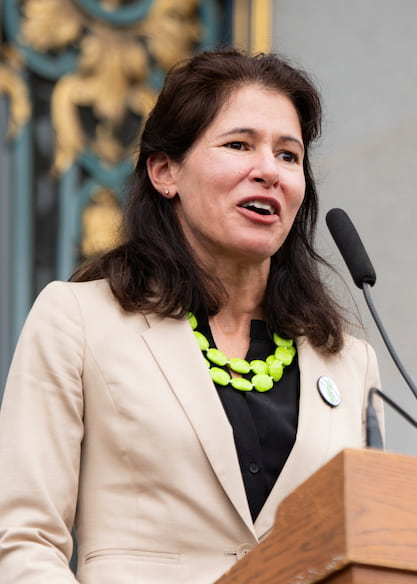
Megan Potente
Decoding Dyslexia CA
Parents are often the first to notice that their child is struggling with written material. Teachers may see signs, too, but lack the training to recognize and address the underlying conditions. I too was left unprepared by my teacher training.
About 10–20% of the population struggles to read and write because of dyslexia, a common learning disability. For too long, the condition has been ignored or misunderstood. In California, parent advocacy has spurred the passage of laws that have already begun to improve reading instruction for millions of children. There’s more work to be done.
The changes now underway will seem obvious or inevitable in retrospect. Of course we train teachers about dyslexia, right? Of course we screen all kids to notice the ones that are secretly struggling to read, right? Well, it wasn’t always so, and the story of how we got here is worth understanding. Here is that story.
Decoding Dyslexia CA
Parents founded the organization Decoding Dyslexia CA (DDCA) around 2012. I joined in 2017. Our mission is to raise awareness of dyslexia and improve literacy outcomes for all struggling readers. We are determined not to let other children experience the same systemic failures our families endured. Over the years, we’ve partnered with researchers, educators, other advocacy groups, and lawmakers to translate our experiences into concrete policies.
Why parents matter when addressing dyslexia
Good ideas don’t automatically become laws, even when kids are at stake. Parents bring three things that policymakers need:
- Urgency (real-life stories of kids whose dyslexia went unrecognized and unaddressed),
- A playbook for success (a solid evidence base supporting proven policy models), and
- Sustained pressure at the grassroots level.
Parents of kids with dyslexia frequently witness their children struggle for years and have to fight for the structured literacy instruction they need. If parents have the resources, they pay for outside help. If not, kids often fail to learn to read. As school becomes increasingly frustrating, doors to opportunity close. The implications of illiteracy are lifelong.

In the Ed100 blog
Too many students can't read
To address illiteracy effectively, California schools have to bridge the gap between the science of reading and the systems of instruction and support in schools. Reading is a widely researched aspect of human cognition and learning, but teacher training has historically lagged behind this knowledge base.
Shining a light on bad reading instruction
Kids with dyslexia don’t need especially unique teaching, it turns out, but they do need more of it and with greater intensity. Students with dyslexia suffer severe consequences from poor literacy instruction.
The movement to address dyslexia, elevated by groundbreaking reporting from Emily Hanford, helped expose popular teaching practices that are out of sync with how children learn to read. Bringing attention to flawed and potentially harmful reading instruction has helped ignite change.
The arc from a parent conversation to statewide law
The first bill that DDCA sponsored was AB 1369 (2015). This got started when, at a local town hall meeting, Assemblymember Jim Frazier publicly declared that he would author dyslexia legislation after hearing Tobie Meyer, the DDCA leader, explain her own story. In tears, Tobie spoke about how her son was denied the dyslexia services he deserved. Tobie’s family hired a lawyer, but the knowledge that many families don’t have this privilege spurred action. From there, parent advocates organized, embraced the research, and brought expertise to policymakers. Their advocacy led to a fundamental shift in how California thinks about reading instruction.
Parent advocates helped turn family frustration into statewide policy. As a result, California now has clearer state-adopted dyslexia guidance, stronger teacher preparation, required early screening, and, most recently, laws that help to align instructional materials and teacher training with the science of reading.
For my son, and for millions of kids like him, explicit reading instruction was critical to his success. Thanks to the laws we helped pass, educators will now learn the skills to explicitly teach kids literacy foundations. See this video of my son, who has overcome his dyslexia, demonstrating one technique that was integral for him to learn to read:
Let me tell you: Passing legislation is not a walk in the park. I am proud that our coalition, including The California State PTA and EdVoice, succeeded in a way that might seem obvious now. But it was not easy. One story illustrates the challenge:

In the Ed100 blog
When California's legislators blew a chance to help kids with dyslexia
We worked closely with Senator Anthony Portantino to write a bill to help teachers determine why students struggle to read. It’s a quick screener to identify reading skills. A no-brainer, right? Wrong, wrong, wrong.
When the bill got to the Assembly, the head of the education committee refused to hold a hearing. The result? No further action on the bill that year. Senator Portantino, the author of the bill, SB 237, blasted the delay in a press release.
“Despite unprecedented public support for dyslexia screening, the Assembly Education Committee has refused to set the bill for consideration. Clearly, California should be doing more to better serve our students in need. Tabling this bill is not just out of touch with the needs of our families and the overwhelming support of Californians, it also does a disservice to the legislative and deliberative process.”
Explanation: The California Teachers Association and advocates for English learners opposed the bill.
This was devastating, but what happened next proved that after more than ten years of pushing for screening, our momentum was unstoppable. People were shocked to learn that California was out of step — one of only ten states that didn’t already require early reading screening, a common-sense expectation not unlike screening for issues with hearing or vision.
Here’s a glimpse of our boisterous rally, held March 29, 2022, on the steps of San Francisco City Hall. It was attended by Senator Portantino, civic leaders, parents, busloads of children, and even Golden State Warrior Gary Payton II, an NBA star with dyslexia.
From kids writing letters to state legislators to parents and educators waiting hours to provide public comments in Sacramento, passing the universal screening law was a testament to grassroots organizing.
The next year, Governor Newsom, who has spoken publicly about having dyslexia, added funding and a requirement for reading screening to the state budget. Advocates for the bill later worked with the opposition to address their concerns.
Legislative successes for children
We are so proud of these California laws:
|
California laws to improve reading instruction |
|
|---|---|
|
Develop California Dyslexia Guidelines (2015) |
AB 1369 (2015) launched the official state process that produced the California Dyslexia Guidelines used by teachers, special education staff, and parents. |
|
California Dyslexia Guidelines. Published in 2017 and updated later. |
Guidelines were released to help educators identify, assess, and support students with dyslexia. |
|
Improving teacher preparation (2021) |
SB 488 (2021) requires the Commission on Teacher Credentialing to update its literacy and reading standards for the preparation of teaching candidates. Programs now include dyslexia and its characteristics, how to screen for risk of dyslexia and how to teach using a structured literacy approach. |
|
Universal screening for reading difficulties (2023). |
SB 114 (2023) and SB 691 established early, universal risk-identification for reading difficulties — including dyslexia — so students can receive interventions before they fall behind. The State Board’s panel approved a set of instruments in 2024. Guidance from the state Department of Education supports districts in implementing the requirement. |
|
Updated instructional materials (2025). |
AB 1454 (2025) aligns instructional materials and credential/leadership standards with evidence-based literacy instruction and requires updates to credential program standards for school administrators and reading specialists. |
|
Money in the budget |
California put money in the budget to support literacy: $250 million in 2023-24 $480 million in 2025-26 $40 million proposed in 2026-27 for reading screenings. |
What this means in classrooms today
Teacher training. Current teachers have access to training. Future teachers will enroll in retooled credential programs where they will learn structured, systematic approaches to teaching foundational reading skills.
Screening for reading risks. Schools now screen every K–2 child for risk of reading difficulties. Educators use the screening results to target early interventions — a major shift from waiting for failure.
Improved curriculum. Over time, curricula and materials adopted at the state and local levels will be required (or certified) to meet evidence-based criteria for teaching foundational skills.
More is needed to follow through on these successes
Funding, implementation, and monitoring for success
There is a big disconnect between passing laws and making sure they are implemented. The success of these initiatives requires leadership at every level.
We can’t just hope that districts purchase effective curriculum, that schools use approved reading screeners, or that educators, including administrators, change outdated instructional strategies.
We need to make sure our laws are funded properly, implemented consistently, and monitored for effectiveness. Teaching our children to read is essential. It can’t be left to chance.
 Megan Potente is the state director of Decoding Dyslexia CA (“DDCA”), a grassroots movement made up of parents, educators and other professionals dedicated to raising awareness and improving access to resources for students with dyslexia in California public schools. A former elementary educator, she has decades of experience as a classroom teacher, literacy specialist, literacy coach, special education teacher, and educational therapist in private practice. She earned her BA from University of Michigan and her MEd from DePaul University. A graduate of University of California Berkeley’s Educational Therapy program, Megan has been featured on KQED and also moderates the California: Science of Reading–What I Should Have Learned in College Facebook group. She has a son, a brother, and a nephew with dyslexia.
Tags on this post
Change Parent Engagement Reading DyslexiaAll Tags
A-G requirements Absences Accountability Accreditation Achievement gap Administrators After school Algebra API Arts Assessment At-risk students Attendance Beacon links Bilingual education Bonds Brain Brown Act Budgets Bullying Burbank Business Career Carol Dweck Categorical funds Catholic schools Certification CHAMP Change Character Education Chart Charter schools Civics Class size CMOs Collective bargaining College Common core Community schools Contest Continuous Improvement Cost of education Counselors Creativity Crossword CSBA CTA Dashboard Data Dialogue District boundaries Districts Diversity Drawing DREAM Act Dyslexia EACH Early childhood Economic growth EdPrezi EdSource EdTech Education foundations Effort Election English learners Equity ESSA Ethnic studies Ethnic studies Evaluation rubric Expanded Learning Facilities Fake News Federal Federal policy Funding Gifted Grade inflation Graduation rates Grit Health Help Wanted History Home schools Homeless students Homework Hours of opportunity Humanities Independence Day Indignation Infrastructure Initiatives International Jargon Khan Academy Kindergarten LCAP LCFF Leaderboard Leadership Learning Litigation Lobbyists Local control Local funding Local governance Lottery Magnet schools Map Math Media Mental Health Mindfulness Mindset Motivation Myth Myths NAEP National comparisons NCLB Nutrition Pandemic Parcel taxes Parent Engagement Parent Leader Guide Parents peanut butter Pedagogy Pensions personalized Philanthropy PISA Planning Policy Politics population Poverty Preschool Prezi Private schools Prize Project-based learning Prop 13 Prop 98 Property taxes PTA Purpose of education puzzle Quality Race Rating Schools Reading Recruiting teachers Reform Religious education Religious schools Research Retaining teachers Rigor Rubrics School board School choice School Climate School Closures Science Serrano vs Priest Sex Ed Site Map Sleep Social-emotional learning Song Special ed Spending SPSA Standardized tests Standards Strike STRS Student motivation Student voice Success Suicide Summer Superintendent Suspensions Talent Taxes Teacher pay Teacher shortage Teachers Technology Technology in education Template Test scores Tests Time in school Time on task Trump Undocumented Unions Universal education Vaccination Values Vaping Video Volunteering Volunteers Vote Vouchers Winners Year in ReviewSharing is caring!
Password Reset
Search all lesson and blog content here.
Login with Email
We will send your Login Link to your email
address. Click on the link and you will be
logged into Ed100. No more passwords to
remember!









Questions & Comments
To comment or reply, please sign in .