



California's most important report card
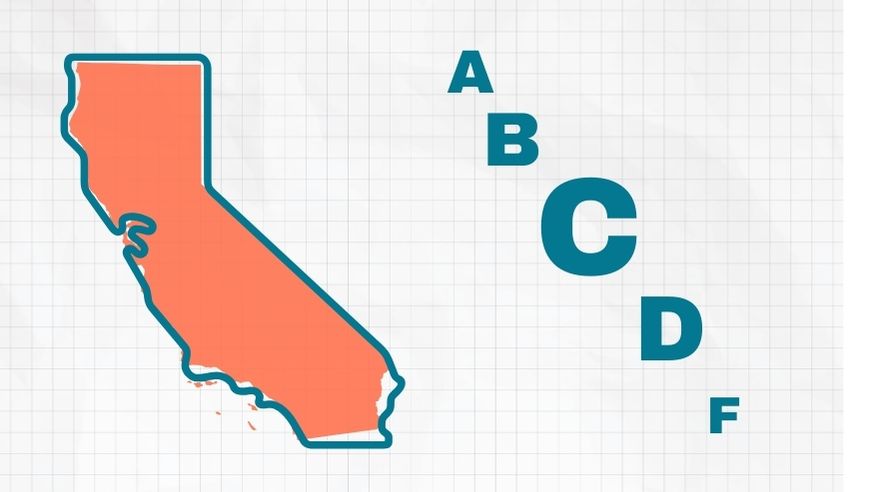
Are the kids OK?
A wise colleague once quipped that “the heart of improvement is to do more of what works, less of what doesn’t, and know the difference.”
California relies on a handful of nonprofit organizations to deliver this kind of clarity. Regular readers of Ed100 will be familiar with Children Now, which advises legislators and helps nonprofit organizations unite their efforts as advocates for children.
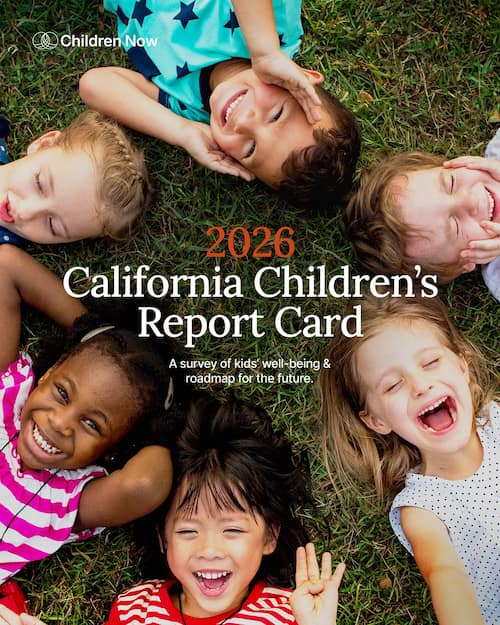
Every other year, Children Now assembles a report card to grade how well California cares for its 13 million children and young people, from pre-natal care through age 26. It’s a huge undertaking — the scope includes data and analysis from at least 32 sources, encompassing issues from child protection to health care to education and beyond.
Legislative staff members often find this report card sobering. It’s an evaluative report about California in context, drawing comparisons to other states and nations where relevant. High grades are rare, and it takes aim at policies and programs that need attention. It’s 100 pages long, but well-organized.
Read on for some selected findings from the report card. Where relevant, this post connects to selected material on Ed100 where you can learn more about the issues.
Bad data?
The report opens with an acknowledgement of damage ahead.
The Trump Administration is in the process of eliminating the federal Department of Education, and has already disrupted the availability of reliable data about some services that matter to children, especially when it comes to subjects that involve gender, food security, immigration, and education spending. Millions of California kids identify with groups that federal measures are increasingly likely to undercount, ignore or underserve. For example, the report points out that at least 16% of California youth identify as LGBTQ+, and 46% are from immigrant families.
Learn more about California’s threatened data system in Ed100 lesson 9.5.
Learn more about the diversity of California’s student body in Ed100 lesson 2.1.
Health
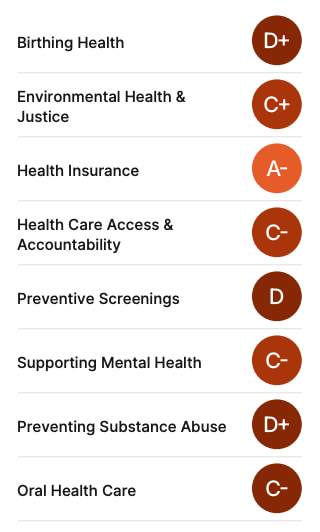
Children Now points out massive disparities in children’s health. For example, babies born in California are three times more likely to die as infants if they are Black than if they are white or Asian. The grade on the report card (D+) is a mark of deadly inequality.
Availability of health insurance for children is a relatively bright spot in the report card (grade: A-), but kids who need specialty care, such as for vision or neurological issues, wait months to be seen (C-).
They say an ounce of prevention is worth a pound of cure — but who pays for prevention? Many low grades in this report card point to suffering and expense that shouldn’t be necessary. Health screenings (D) could head off expensive issues, but the system is built around a pay-for-procedure model, not a pay-to-prevent model. A possible exception: California might be making some progress on oral health care (C-) through school-based screening partnerships in some parts of the state. Toothaches are awful, and they cause kids to miss school. Dental checkups can avoid these problems.
Learn more about the connections between health and learning in Ed100 lesson 2.3.
Education
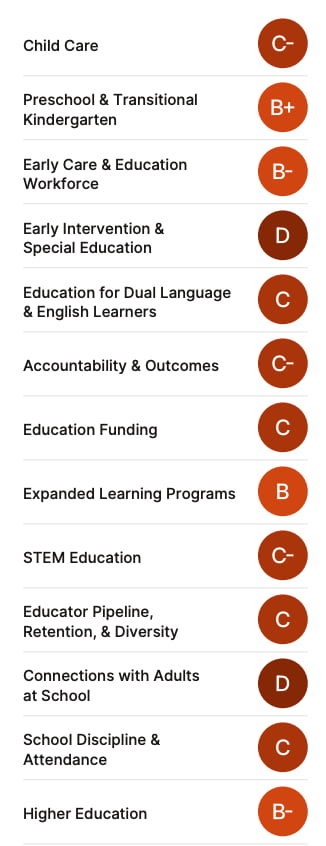
When it comes to education, the report card highlights progress that California has made in providing families with access to preschool and transitional kindergarten (B+), but the grades for child care (C-) and early intervention (D) point to problems that federal cutbacks have made worse. For example, many families are theoretically eligible for subsidized child care, but only 14% of those eligible actually receive it.
When it comes to the core work of educating kids in PreK-12, California earns middling marks. This is no surprise: you get what you pay for! As Ed100 chapter 8 explains, California funds education as if it were an average state (C) — but it isn’t. California is an expensive place to live where college-educated people with the skills to teach have many job options.
Teaching is hard, and educators are human. Districts that don’t pay teachers enough tend to lose them. School districts face unavoidable tension between how many teachers to hire, how much to pay them, which benefits to provide and for how long. For decades, California kids have had among the largest class sizes in America, which makes connections with adults rare (D) discipline difficult (C) and STEM courses unruly (C-).
A recurring fantasy holds that money doesn’t matter in education. Wrong. Money isn’t magic, but it pays for the things that matter: teachers, staff, materials, programs and facilities.
California’s K-12 education funding system (LCFF) is widely admired (grade: C), but the report points out that, like many state systems, it is basically indifferent to results. The Children Now report awards a low grade (C-) for California’s system of accountability partly because it excludes individual student learning improvement (“growth”) from its measures of success. Districts might get extra funds to address failure, but not to inspire success or experimentation.
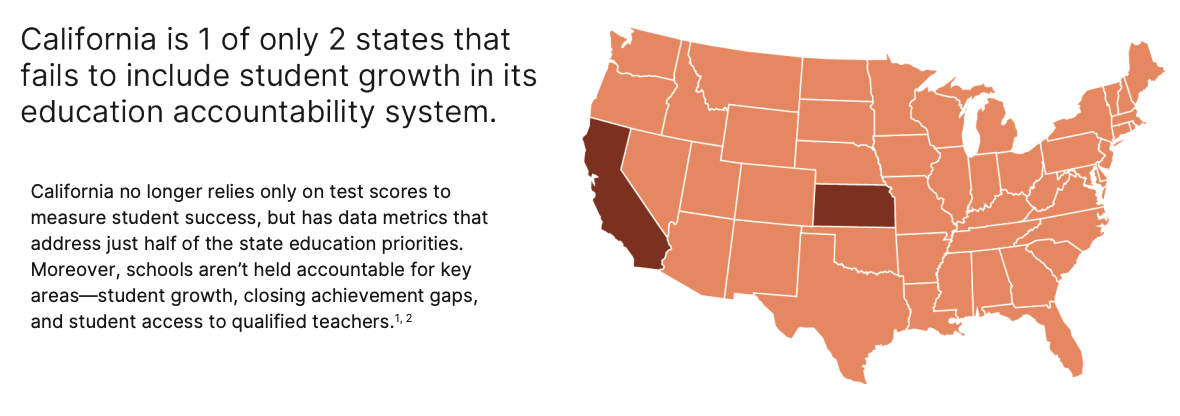
California’s students are often compared with those in Texas and Florida because many students in all of these states are learning English. The report awards California a grade that seems awfully polite for its undistinguished results in educating English learners (C). The gap isn’t subtle. Less than one student out of every ten learning English in California meets math standards in fifth grade. It should be seen as a crisis.
Family supports
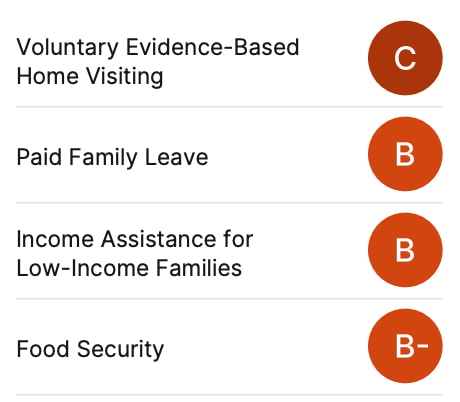
Children are vulnerable if their families are vulnerable. During the pandemic, federal funding protected millions of children from some of the worst hardships of poverty. Those funds have gone away, leaving kids distracted by hunger and housing insecurity.
“California has the highest rate of child poverty of any state at 18.6%—affecting nearly 1.6 million children… Pandemic-era federal funds have recently ended, and federal budget and policy choices have shrunk critical programs. As a result, the State is seeing a rapid rebound of child poverty rates, especially for kids under 12.”
The report reviews metrics from multiple programs that serve families, especially those with low income. Specifically, the report highlights the value of home visiting programs for new and expecting parents, a proven and powerful strategy that helps them get started in the mysterious job of caring for a tiny human. A related idea not mentioned in the report is home visits for teachers, which can help build connections between students, educators, and families. If your school hasn’t looked into this, it should. PTAs can play a role in nudging schools and districts to try it.
Child Welfare
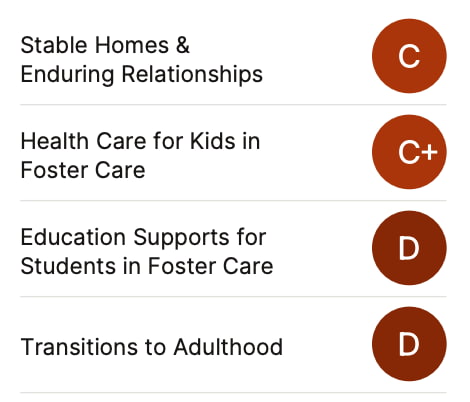
Child abuse, neglect, and maltreatment are massive problems. Over the course of their childhood, about 1 out of 4 children in California experiences an investigation for maltreatment, with big variations in the rate by race, ethnicity, and economic conditions. School employees play a strong role in noticing and reporting possible cases and referring them for investigation.
As Ed100 Lesson 2.8 explains, Child Protective Services are managed by each county in California. Anyone who works with children should learn how to report a concern in their county.
A small percentage of reported cases result in a child being placed in foster care. Outcomes in adulthood for these children tend to be poor (D); more than half of them experience homelessness between ages 17 and 21 according to data featured in the report.
Learn more
There’s a lot more to find in the California Children’s Report Card, and it’s easy to browse and share. If you have an hour or so, watch the authors’ presentation about it.
Tags on this post
All Tags
A-G requirements Absences Accountability Accreditation Achievement gap Administrators After school Algebra API Arts Assessment At-risk students Attendance Beacon links Bilingual education Bonds Brain Brown Act Budgets Bullying Burbank Business Career Carol Dweck Categorical funds Catholic schools Certification CHAMP Change Character Education Chart Charter schools Civics Class size CMOs Collective bargaining College Common core Community schools Contest Continuous Improvement Cost of education Counselors Creativity Crossword CSBA CTA Dashboard Data Dialogue District boundaries Districts Diversity Drawing DREAM Act Dyslexia EACH Early childhood Economic growth EdPrezi EdSource EdTech Education foundations Effort Election English learners Equity ESSA Ethnic studies Ethnic studies Evaluation rubric Expanded Learning Facilities Fake News Federal Federal policy Funding Gifted Grade inflation Graduation rates Grit Health Help Wanted History Home schools Homeless students Homework Hours of opportunity Humanities Independence Day Indignation Infrastructure Initiatives International Jargon Khan Academy Kindergarten LCAP LCFF Leaderboard Leadership Learning Litigation Lobbyists Local control Local funding Local governance Lottery Magnet schools Map Math Media Mental Health Mindfulness Mindset Motivation Myth Myths NAEP National comparisons NCLB Nutrition Pandemic Parcel taxes Parent Engagement Parent Leader Guide Parents peanut butter Pedagogy Pensions personalized Philanthropy PISA Planning Policy Politics population Poverty Preschool Prezi Private schools Prize Project-based learning Prop 13 Prop 98 Property taxes PTA Purpose of education puzzle Quality Race Rating Schools Reading Recruiting teachers Reform Religious education Religious schools Research Retaining teachers Rigor Rubrics School board School choice School Climate School Closures Science Serrano vs Priest Sex Ed Site Map Sleep Social-emotional learning Song Special ed Spending SPSA Standardized tests Standards Strike STRS Student motivation Student voice Success Suicide Summer Superintendent Suspensions Talent Taxes Teacher pay Teacher shortage Teachers Technology Technology in education Template Test scores Tests Time in school Time on task Trump Undocumented Unions Universal education Vaccination Values Vaping Video Volunteering Volunteers Vote Vouchers Winners Year in ReviewSharing is caring!
Password Reset
Search all lesson and blog content here.
Login with Email
We will send your Login Link to your email
address. Click on the link and you will be
logged into Ed100. No more passwords to
remember!








Questions & Comments
To comment or reply, please sign in .