


The Federal Scholarship Tax Credit, explained
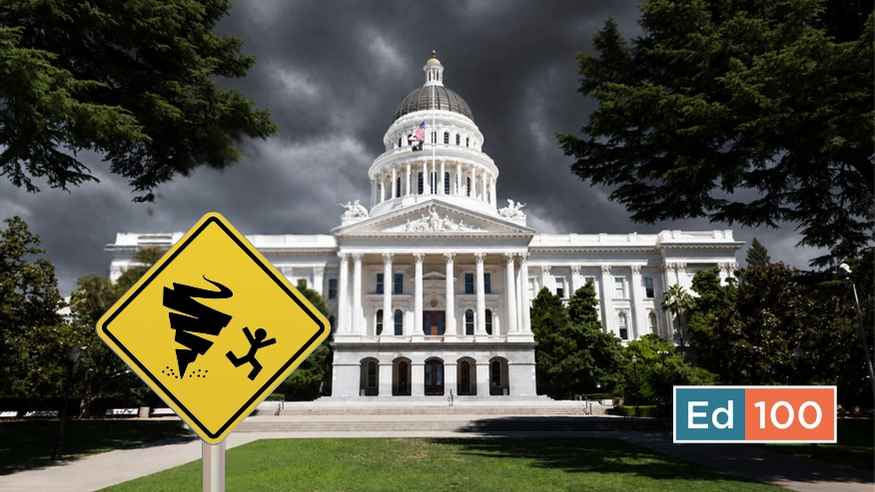
Starting January 1, 2027, any taxpayer can redirect a portion of their federal income tax to certain non-profit organizations called Scholarship Granting Organizations (SGOs) instead of the US Treasury.
In This Post
(Click to jump to them)
What is the Federal Scholarship Tax Credit?
How is a tax credit different from a deduction?
Where does the money go?
Who can get a scholarship?
What can a scholarship pay for?
Does California have to opt in?
Where do things stand?
Which states are participating?
Should California opt in?
What can I do?
Supported by religious organizations and church-affiliated groups, the program was mainly created to support K-12 tuition at religious schools and private schools, but SGOs can make some grants through public schools, too. There is no revenue source for this program — in effect, it will add billions to the federal debt as tax expenditures. There is no cap on the program’s total cost, and Treasury estimates that by 2030 it could redirect nearly $26 billion a year.
The policy extends on private school funding proposals by former Education Secretary Betsy DeVos. Fleshed out in Project 2025, it became law as part of the 2025 budget reconciliation package known as the “One Big Beautiful Bill.” It is one of several measures in the law that take effect on Jan 1, 2027.
Our take: This is bad policy.
This post explains the tax credit and its implications. As of this writing in November, 2026, some important details remain uncertain. Notably, Governor Newsom must decide by January 1 whether California will opt in to the program for 2027. We hope he will decide not to do so — the tax credit is bad public policy. There is no public consensus for this policy — it was jammed into a bad bill that squeaked into law with the tie-breaking vote of Vice President J.D. Vance. It should be rescinded before it takes root. We are steadfast supporters of strong universal education. This is not the way.
What it is (and why it has three names)
The Federal Scholarship Tax Credit (FSTC) is known by at least two other names. Some supporters prefer to call it the “Education Freedom Tax Credit” (EFTC) because its primary aim is to enable more families to afford private schools. The tax code calls it “section 25F”.
Regardless of which name sticks, the key word is credit. Tax law includes two tools that sound alike but work very differently:
- A deduction lowers the amount of income you pay tax on. If you're in the 22% bracket, a $1,000 deduction saves you about $220.
- A credit effectively pays your tax bill, dollar for dollar. A $1,000 credit saves you $1,000.
Virtue check: Is it a "donation" if it costs you nothing?
Under the FSTC, a single taxpayer who redirects up to $1,700 of their taxes to an approved scholarship nonprofit in one year gets a federal tax credit for the full amount the next year. Money in excess of this cap can carry forward and be claimed on later tax returns. A married couple filing jointly can claim up to $3,400 per year. For most taxpayers, that means the “donation” costs them nothing: it is money they would have paid to the IRS, funding the operation of the nation. Instead, the money is rerouted to a scholarship fund.
The credit is nonrefundable. It can shrink your federal tax bill to zero, but it won't send you a check beyond that. Roughly a third of federal tax filers owe enough tax to claim the full credit. Under the OBBB, taxpayers who direct taxes into scholarship funds are called “donors” even if the redirected funds involve no net cost to themselves.
Where the money goes: SGOs
A taxpayer's debt-funded “donation” isn't a check directly to a student or a school. Instead, the money goes to a Scholarship Granting Organization (SGO), a nonprofit that pools donations. SGOs must pay out at least 90% of the money as scholarships through private schools or other providers in a timeframe that amounts to a maximum of two years. Each participating state provides the IRS with an annual list of authorized SGOs.
There’s no minimum or maximum scholarship and no requirement to serve the lowest-income students first. Each SGO decides. School districts play no role.
There are winners and losers in this new program: Public schools lose because energy, philanthropy, and creativity for change will shift to SGOs. In the short run, the individual taxpayer who participates ends up even. The federal Treasury loses, absorbing the cost as debt to be paid in future generations. The SGO collects a small fee that funds their operation, including costs for accounting, fraud prevention, and services. Some private school students will get scholarships. Some public school students will leave public education to attend private schools. The California State PTA succintly expressed its opposition in a letter to Governor Newsom.
Students and parents don't receive or control money directly under this program; private schools or other qualified organizations receive the money to issue scholarships or pay for services. SGO staff and board members may be compensated, with documentation on the organization's annual Form 990.
Who can get a scholarship?
SGOs choose their recipients with few constraints. They can disburse funds in service of K-12 students whose household income is at or below 300% of the area median income, a high ceiling. In much of coastal California, 300% of the local median reaches well into six figures.
To limit self-dealing, contributors can’t earmark gifts for a particular student, and SGOs can’t give big scholarships to their own insiders or to the families of very large givers (more than $5,000 a year). A parent who contributes the usual $1,700, though, can still apply to that same SGO for their own child. Under the law, siblings receive preference, as do prior-year recipients. An SGO must fund at least 10 students who don’t all attend the same school.
What can a scholarship pay for?

Ed100 Lesson 5.6
Private Schools: Tuition, Vouchers, and Religion
Tuition for private and religious schools is the main intended use of SGO funds. The law also permits SGOs to use funds in other ways. For example, SGOs may grant non-tuition scholarships on behalf of students in public schools for purposes such as tutoring, special education services, books and supplies, transportation, extended-day programs, and technology. The full details are not settled yet.
Public school districts cannot serve as SGOs, but private non-profit education foundations could do so if they serve students in at least two schools. SGOs must spend at least 90% of their income on scholarships, but up to 10% can support other expenses.
States must opt in, each year

Ed100 Lesson 7.2
The Federal Government and Education: Small money, Big Influence
Although the credit is federal, each state has a limited on-off switch. A state participates only if its governor (or someone state law designates) opts in, and the decision has to be renewed each year. For 2027, there are two steps:
|
Deadline |
What the state must do |
|---|---|
|
January 1, 2027 |
File an “advance election” with the IRS (Form 15714) saying it intends to participate |
|
February 15, 2027 |
Submit its list of approved SGOs. |
There's an odd twist: Californians can redirect taxes from the IRS to SGOs whether or not California opts in. For example, a California taxpayer can direct $1,700 to an SGO in Arizona or Texas and still get the full federal credit. What California students lose if the state stays out is the ability to receive services funded by those scholarships.
Where things stand
As of November 11, 2026, 30 states had formally opted in and two more (New York and New Mexico) had announced they would do so. Most participating states have Republican governors. About 15 Democratic governors, including Newsom, have not decided.
Tally as of Nov. 15, 2026: 32 opted in, 15 undecided (including D.C.), 2 vetoed, 2 declined. “Opted in” means the state is on the IRS list of states that have filed an advance election. Every participating state must still submit its SGO list by February 15, 2027, and must opt in again each year.
In California, the deadline creates an odd handoff. Newsom's term ends in early January, so the January 1 opt-in is his call alone. If he files, Governor-elect Xavier Becerra must decide whether to finish the job by submitting the SGO list by February 15. If Newsom does nothing, California sits out 2027, and the 2028 decision falls to Becerra. As of November 9, Newsom's office said only that the governor is reviewing the program.
Two more things are in motion. First, the rules are still being written: Treasury and the IRS released temporary and proposed regulations on October 1, 2026, and proposed rules can change after public comment. Second, the November election gave Democrats control of Congress starting in January, which has set off speculation that Congress could rewrite or end the program. Some governors may simply wait to see what happens.
To follow developments, subscribe to EdSource.org, which reports on California's education sector. According to John Fensterwald, Editor at Large, the program is probably here to stay, even after the 2026 midterm elections. “Trump would likely veto a bill to terminate the program, and even with the Democrat-dominated Congress, Democrats would not have enough votes to override a veto.”
Should California opt in?
This is a genuine policy fight, with serious people on both sides.
|
YES: The case for opting in |
NO: The case against opting in |
|---|---|
|
It costs California nothing directly.
|
It robs the treasury.
|
|
Families want options.
|
It favors the well-off.
|
|
Public school students can benefit some too.
|
Little accountability.
|
|
Keep California money in California.
|
It's prudent to wait. |
What to watch, and what you can do
- January 1, 2027: Does Newsom file California's advance election?
- February 15, 2027: If he does file, does the Becerra administration submit an SGO list?
- Treasury's expense guidance: The final list of allowable expenses will shape the program's impact on public school students.
- Congress: Watch for bills to change or repeal the credit.
This decision will be made by one person on a short timeline, so if you have a point of view, the Governor's office is the place to share it. If California does join, school board members and parent leaders should ask a practical question early: will our district partner with an SGO to raise money for tutoring and other support?
To contact Governor Newsom: use the online contact form, call (916) 445-2841, or write to Governor Gavin Newsom, 1021 O Street, Suite 9000, Sacramento, CA 95814.
As we say at the top, we think this federal tax credit is bad policy and should be dumped. What do you think and why? Please leave a comment below. Please be brief and patient — we moderate all comments before posting.
Tags on this post
All Tags
A-G requirements Absences Accountability Accreditation Achievement gap Administrators After school Algebra API Arts Assessment At-risk students Attendance Beacon links Bilingual education Bonds Brain Brown Act Budgets Bullying Burbank Business Career Carol Dweck Categorical funds Catholic schools Certification CHAMP Change Character Education Chart Charter schools Civics Class size CMOs Collective bargaining College Common core Community schools Contest Continuous Improvement Cost of education Counselors Creativity Crossword CSBA CTA Dashboard Data Dialogue District boundaries Districts Diversity Drawing DREAM Act Dyslexia EACH Early childhood Economic growth EdPrezi EdSource EdTech Education foundations Effort Election English learners Equity ESSA Ethnic studies Ethnic studies Evaluation rubric Expanded Learning Facilities Fake News Federal Federal policy Funding Gifted Grade inflation Graduation rates Grit Health Help Wanted History Home schools Homeless students Homework Hours of opportunity Humanities Independence Day Indignation Infrastructure Initiatives International Jargon Khan Academy Kindergarten LCAP LCFF Leaderboard Leadership Learning Litigation Lobbyists Local control Local funding Local governance Lottery Magnet schools Map Math Media Mental Health Mindfulness Mindset Motivation Myth Myths NAEP National comparisons NCLB Nutrition Pandemic Parcel taxes Parent Engagement Parent Leader Guide Parents peanut butter Pedagogy Pensions personalized Philanthropy PISA Planning Policy Politics population Poverty Preschool Prezi Private schools Prize Project-based learning Prop 13 Prop 98 Property taxes PTA Purpose of education puzzle Quality Race Rating Schools Reading Recruiting teachers Reform Religious education Religious schools Research Retaining teachers Rigor Rubrics School board School choice School Climate School Closures Science Serrano vs Priest Sex Ed Site Map Sleep Social-emotional learning Song Special ed Spending SPSA Standardized tests Standards Strike STRS Student motivation Student voice Success Suicide Summer Superintendent Suspensions Talent Taxes Teacher pay Teacher shortage Teachers Technology Technology in education Template Test scores Tests Time in school Time on task Trump Undocumented Unions Universal education Vaccination Values Vaping Video Volunteering Volunteers Vote Vouchers Winners Year in ReviewSharing is caring!
Password Reset
Search all lesson and blog content here.
Login with Email
We will send your Login Link to your email
address. Click on the link and you will be
logged into Ed100. No more passwords to
remember!





Questions & Comments
To comment or reply, please sign in .